
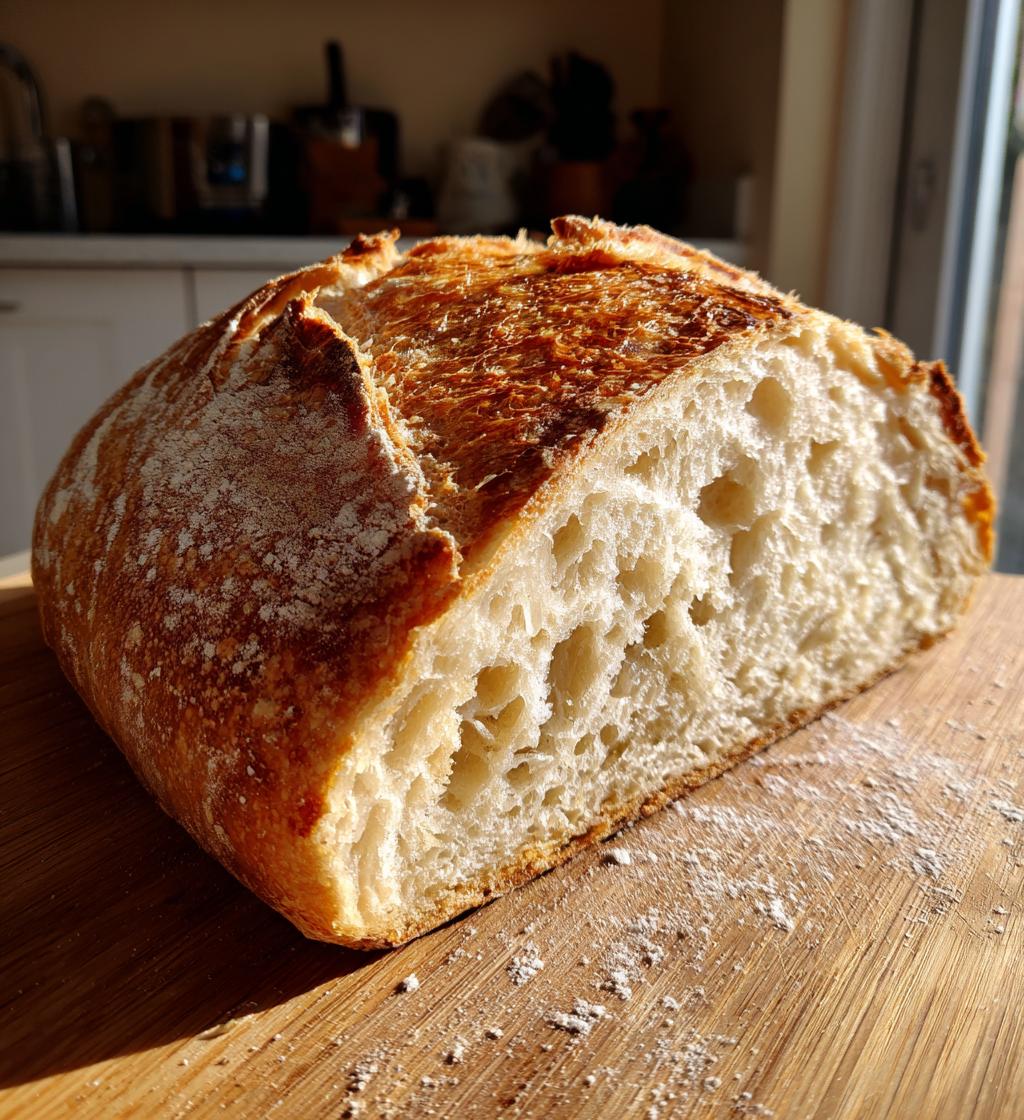
There’s something incredibly comforting about the aroma of homemade bread wafting through your kitchen, isn’t there? When I bake my sourdough sandwich bread, it feels like a warm hug from the inside out. The process of making this bread is not just about mixing ingredients; it’s about nurturing a living culture, experiencing the magic of fermentation, and creating something truly special for my family and friends.
Using sourdough starter adds a depth of flavor and a delightful chewiness that you simply can’t find in store-bought bread. Plus, the natural fermentation process makes it easier to digest and gives it that lovely tang that pairs perfectly with any filling you can imagine. Trust me, once you taste a slice of this freshly baked sourdough sandwich bread, you’ll never want to go back to the packaged stuff!
So, roll up those sleeves and get ready to dive into the wonderful world of sourdough baking. I promise you, it’s a journey filled with joy, a sprinkle of patience, and the reward of delicious, homemade bread that will make your heart sing.
Ingredients for Sourdough Sandwich Bread
To create the best sourdough sandwich bread, you’ll need a few simple yet essential ingredients. Here’s what you’ll need:
- 500g bread flour: This is the foundation of your bread, providing the necessary structure. I prefer using high-protein bread flour because it helps develop that beautiful gluten network, giving the bread its delightful chewiness.
- 350g water: Room temperature water is ideal here. It hydrates the flour and helps activate your sourdough starter. Don’t worry about being too precise; just make sure to account for any variation in humidity!
- 100g sourdough starter: Make sure your starter is bubbly and active before you add it. This little powerhouse brings flavor and leavening to your bread, creating that characteristic sourdough taste. If it’s been a while since you’ve fed it, give it a little love a few hours before you start baking.
- 10g salt: Salt is crucial for flavor and it also strengthens the gluten structure. I always use fine sea salt because it dissolves easily into the dough. Just be sure not to skip this step, as it really elevates the overall taste of your bread!
Gather these ingredients, and let’s get started on turning them into something magnificent!
How to Prepare Sourdough Sandwich Bread
Now that we have our ingredients ready, let’s dive into the lovely process of making sourdough sandwich bread. Follow these steps and watch as your kitchen transforms into a bakery filled with the most delightful aromas!
Mixing the Dough
Start by grabbing a large mixing bowl. Add your 500g of bread flour and 350g of water. Using a spatula or your hands, mix them together until they’re just combined. You don’t need to overwork it yet; we’re just looking for a shaggy dough here. This initial mix is crucial because it allows the flour to absorb the water, which helps with gluten development later on. So, get in there and mix until you don’t see any dry flour – it should feel a little sticky, and that’s perfect!
Adding Sourdough Starter and Salt
Next up, it’s time to introduce your bubbly 100g sourdough starter and 10g of salt to the dough. This is where the magic happens! The sourdough starter not only gives your bread its distinct flavor but also acts as the leavening agent that will help it rise. Adding salt is just as important because it enhances flavor and strengthens the dough’s structure. Gently fold the starter and salt into the dough until they’re fully incorporated. Don’t worry about getting it perfect at this stage; we’ll knead it soon!
Kneading the Dough
Now, let’s get our hands dirty! Flour your work surface and turn out the dough. Knead it for about 10 minutes until it’s smooth and elastic. To knead, push the dough away from you with the heel of your hand, fold it back over itself, and give it a quarter turn. Repeat this process, adding a little flour if it’s too sticky. You’ll know it’s ready when it bounces back slightly when you poke it – that’s the gluten working its magic!
First Rise and Folding
After kneading, place your dough in a lightly greased bowl and cover it with a damp cloth or plastic wrap. Now comes the waiting game! Let it rise for about 4 hours at room temperature. Here’s where it gets fun: every hour, gently fold the dough over itself a couple of times. This folding technique strengthens the gluten and helps develop a nice structure. You’ll see it grow and puff up beautifully!
Shaping the Loaf
Once your dough has risen, it’s time to shape it into a loaf. Turn it out onto a lightly floured surface and gently flatten it into a rectangle. Fold the short ends in towards the center and then roll it up tightly, tucking the edges as you go. Pinch the seams to seal it up nicely. This shaping gives your loaf that beautiful, uniform look and helps create a nice rise during the second proof!
Second Rise
Now, place your shaped loaf into a greased loaf pan seam-side down. Cover it again and let it rise for another 2 hours. This second rise is super important because it allows the dough to develop more flavor and volume. You’ll notice it puffing up again, and it’s a good idea to keep an eye on it – you want it to double in size and fill the pan!
Baking the Bread
Preheat your oven to 220°C (425°F) about 30 minutes before you’re ready to bake. This ensures it’s nice and hot, ready to give your loaf that perfect crust. Once preheated, carefully place your loaf pan in the oven. Bake for about 30-35 minutes, or until the bread has a lovely golden-brown crust. You can tell it’s done when it sounds hollow when tapped on the bottom. Oh boy, that smell will be heavenly!
Cooling and Slicing
After baking, remove the loaf from the oven and let it cool in the pan for about 10 minutes. Then, carefully turn it out onto a wire rack to cool completely. I know it’s tempting, but resist the urge to slice it right away! Letting it cool fully allows the crumb to set and prevents it from being gummy. Once it’s cool, grab that bread knife and slice into your masterpiece. Enjoy the fruits of your labor and get ready to savor every delicious bite!
Tips for Success with Sourdough Sandwich Bread
Now that you’re all set to bake your sourdough sandwich bread, let me share some of my favorite tips that will help ensure your loaf turns out perfectly every single time. Trust me, these little nuggets of wisdom can make a world of difference!
- Use a Kitchen Scale: For precise measurements, a kitchen scale is your best friend. Baking is a science, and even a slight variation in flour or water can affect the outcome. Measuring by weight gives you consistent results, which is key for that perfect loaf.
- Feed Your Starter: Make sure your sourdough starter is active and bubbly before you begin. If it’s been sitting in the fridge for a while, give it a good feed a few hours before you plan to bake. An active starter means a better rise and more flavor!
- Time is Your Ally: Don’t rush the rising times. Sourdough is all about patience! Letting the dough ferment and rise slowly develops those wonderful flavors and texture. If you can, leave it to rise longer; it won’t hurt at all!
- Watch the Temperature: Room temperature can affect how your bread rises. If your kitchen is too cold, it might take longer for the dough to rise. Conversely, if it’s too warm, it might rise too quickly. Aim for a comfortable, warm environment to help your dough thrive.
- Use a Dutch Oven for Baking: If you want an even better crust, consider baking your loaf in a preheated Dutch oven. The enclosed space traps steam, creating a crispy crust while keeping the inside soft and fluffy. Just be careful when transferring it to avoid burns!
- Cooling is Key: I know it’s hard to resist that fresh-baked smell, but letting your bread cool completely on a wire rack is essential. This helps the crumb set properly, and you’ll avoid a gummy texture when slicing.
- Experiment with Add-Ins: Feel free to get creative! Once you’re comfortable with the basic recipe, try adding herbs, seeds, or even nuts to your dough. Just remember to keep any add-ins balanced with the overall dough weight!
With these tips in your back pocket, you’ll be well on your way to mastering sourdough sandwich bread. Each loaf will be a labor of love, and I can’t wait for you to taste the delicious results!
Nutritional Information
As you enjoy your homemade sourdough sandwich bread, it’s always nice to know what you’re putting into your body. Here’s an estimate of the typical nutritional values per slice:
- Calories: 150
- Fat: 1g
- Saturated Fat: 0g
- Unsaturated Fat: 1g
- Trans Fat: 0g
- Cholesterol: 0mg
- Sodium: 180mg
- Carbohydrates: 30g
- Fiber: 1g
- Protein: 5g
- Sugar: 0.5g
Keep in mind that these values are estimates and can vary depending on the specific ingredients you use and the size of your slices. It’s always a good idea to adjust according to your personal dietary needs and preferences. Enjoy your baking adventure, and savor each slice of this delicious creation!
FAQ about Sourdough Sandwich Bread
How do I know my sourdough starter is active?
Great question! An active sourdough starter is bubbly, has doubled in size within a few hours after feeding, and has a pleasant, slightly tangy smell. You might also notice some bubbles forming on the surface – that’s a good sign! A simple test is the “float test”: take a small spoonful of your starter and drop it in a glass of water. If it floats, it’s ready to go! If it sinks, give it a little more time or feed it again.
Can I use whole wheat flour instead of bread flour?
Absolutely, you can use whole wheat flour! Just keep in mind that it will give your bread a denser texture and a nuttier flavor. Whole wheat flour absorbs more water than bread flour, so you might need to adjust the hydration a bit. I usually start with about 10% less flour and add a little extra water if the dough feels too dry. You could even mix half whole wheat and half bread flour for a lovely balance!
What should I do if my bread doesn’t rise?
Oh no, that can be frustrating! First, check to see if your sourdough starter was active when you used it; an inactive starter can lead to poor rising. Also, consider your dough’s rising environment—if it’s too cold, it might take longer to rise. If that’s the case, try moving it to a warmer spot or giving it a little extra time. If it still doesn’t rise, you can always salvage the bread by baking it as a flatbread or croutons. But don’t worry, with practice, you’ll get the hang of it!
Why You’ll Love This Recipe
- Simple Ingredients: With just four basic ingredients, you can create a delicious loaf that doesn’t require any fancy additives or preservatives.
- Nutritious and Wholesome: Sourdough bread is easier to digest thanks to its natural fermentation process, making it a healthier choice for your sandwiches.
- Customizable: This recipe is a fantastic canvas for creativity! You can easily add herbs, seeds, or even dried fruits to suit your taste.
- Delicious Flavor: The tangy taste from the sourdough starter gives this bread a unique flavor profile that elevates any sandwich.
- Perfect Texture: You’ll love the satisfying chewiness and crusty exterior, making each bite a delight!
- Homemade Goodness: There’s nothing quite like the satisfaction of making your own bread. It fills your home with an irresistible aroma and brings a sense of accomplishment.
- Versatile: Whether you’re making a classic PB&J, gourmet grilled cheese, or a hearty deli sandwich, this sourdough sandwich bread is the perfect base for all your creations.

Sourdough Sandwich Bread: 7 Secrets to Irresistible Flavor
- Total Time: 5 hours
- Yield: 1 loaf 1x
- Diet: Vegetarian
Description
A simple recipe for making sourdough sandwich bread at home.
Ingredients
- 500g bread flour
- 350g water
- 100g sourdough starter
- 10g salt
Instructions
- Mix the flour and water in a bowl until combined.
- Add the sourdough starter and salt to the mixture.
- Knead the dough for 10 minutes until smooth.
- Let the dough rise for 4 hours, folding it every hour.
- Shape the dough into a loaf and place it in a greased loaf pan.
- Let the loaf rise for 2 hours.
- Bake in a preheated oven at 220°C (425°F) for 30-35 minutes.
- Cool the bread on a wire rack before slicing.
Notes
- Use a kitchen scale for accurate measurements.
- Ensure your sourdough starter is active.
- Adjust baking time based on your oven’s performance.
- Prep Time: 30 minutes
- Cook Time: 35 minutes
- Category: Bread
- Method: Baking
- Cuisine: American
Nutrition
- Serving Size: 1 slice
- Calories: 150
- Sugar: 0.5g
- Sodium: 180mg
- Fat: 1g
- Saturated Fat: 0g
- Unsaturated Fat: 1g
- Trans Fat: 0g
- Carbohydrates: 30g
- Fiber: 1g
- Protein: 5g
- Cholesterol: 0mg
Keywords: sourdough sandwich bread