
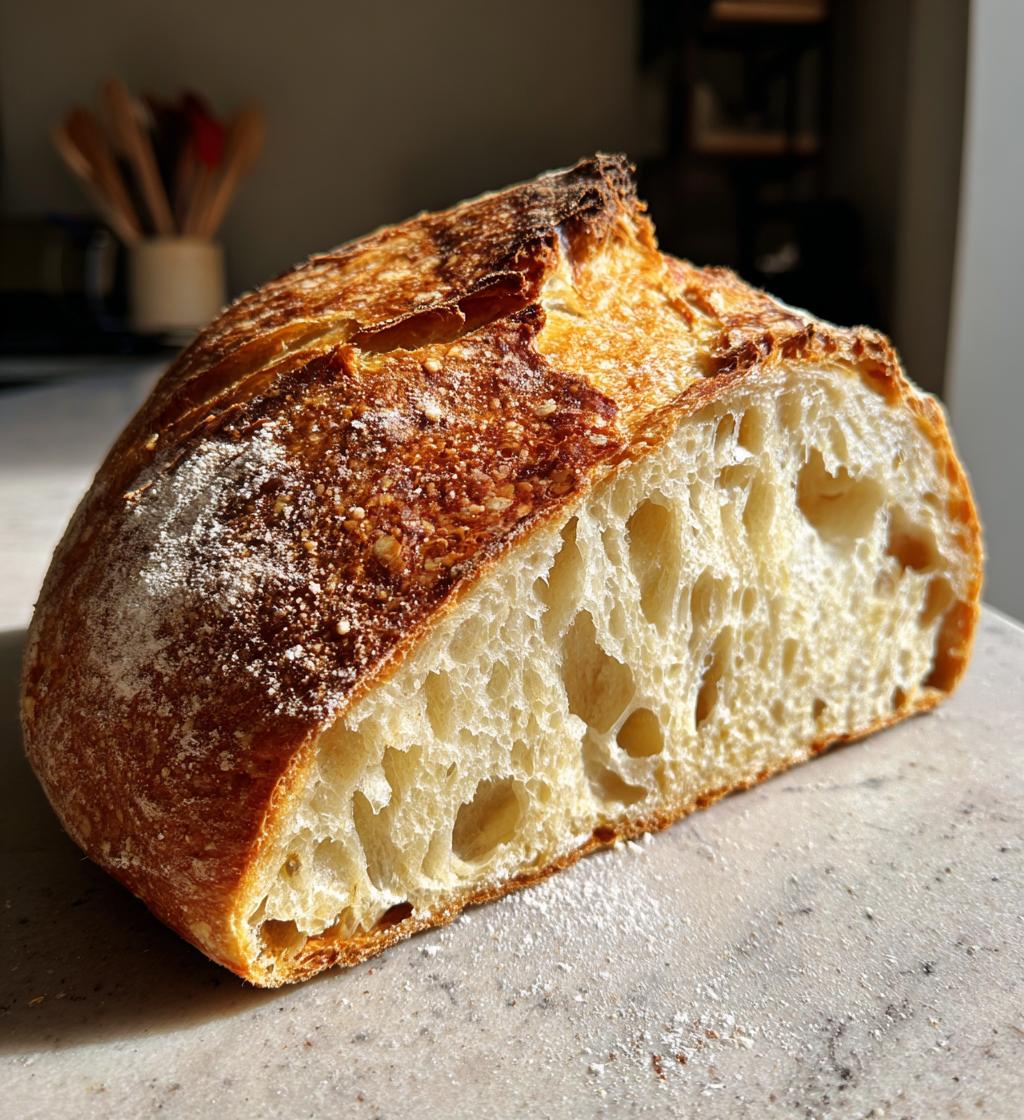
Oh, where do I even start with my journey into the world of sourdough bread? It all began one rainy afternoon when I stumbled upon a crusty loaf at a farmer’s market. I was hooked! The aroma, the texture, that crackling crust—it just screamed comfort. So, I decided to take the plunge and try my hand at making it myself. Let me tell you, this *sourdough bread recipe* is the perfect place to start, especially if you’re a beginner like I was. It’s surprisingly simple yet incredibly rewarding!
What I love most is how the process allows you to connect with the ingredients. Mixing, kneading, and waiting for that dough to rise feels almost meditative. And when you finally pull that golden loaf from the oven? Pure magic! The joy of slicing into it, watching the steam rise, and slathering on some butter is unmatched. Trust me, once you make your own sourdough, you’ll never want to go back to store-bought. So, grab your apron, and let’s get ready to create something truly special together!
Ingredients for Sourdough Bread Recipe
Before we dive into the baking magic, let’s gather our ingredients! Here’s what you’ll need for this delightful sourdough bread recipe:
- 500g bread flour: This is your foundation! Bread flour has a higher protein content, which helps create that perfect chewy texture we all love.
- 350ml water: Make sure it’s at room temperature. Water activates the gluten and helps the dough rise, so it’s a key player in this recipe!
- 100g sourdough starter: The heart of your bread! Ensure your starter is active and bubbly for the best results. This little guy is packed with flavor and helps with fermentation.
- 10g salt: Salt not only enhances flavor but also strengthens the dough structure. Don’t skip this step—your bread will thank you!
With these simple ingredients, you’re well on your way to making a beautiful loaf of sourdough! The combination of flour, water, starter, and salt creates a symphony of flavors and textures that’s just irresistible. Let’s get baking!
How to Prepare the Sourdough Bread Recipe
Now that we’ve gathered our ingredients, let’s dive into the wonderful process of making this sourdough bread! Follow these steps carefully, and you’ll be rewarded with a beautiful loaf that’s as delicious as it is satisfying to create.
Mixing the Ingredients
Start by combining your 500g of bread flour and 350ml of room temperature water in a large mixing bowl. Use a wooden spoon or your hands to mix until everything is well combined—don’t worry about getting it perfect at this stage! You want to ensure there are no dry bits of flour left. This mixing process is essential because it activates the gluten, which will give your bread that lovely structure. Once it’s all mixed, let it rest for about 30 minutes. This rest period, called autolyse, allows the flour to fully hydrate and makes the next steps easier.
Kneading the Dough
After your dough has rested, it’s time for the fun part: kneading! Turn the dough out onto a lightly floured surface and begin to knead it for about 10 minutes. You’ll want to push the dough away from you with the palms of your hands, then fold it back over itself and turn it a quarter turn. Repeat this motion until the dough becomes smooth and elastic. If it’s sticky, sprinkle a little more flour as needed, but don’t go overboard! The goal is to develop a nice gluten structure without making it too dry. You’ll know it’s ready when you can stretch it without tearing—this is called the windowpane test!
Allowing the Dough to Rise
Once kneaded, place your dough in a lightly greased bowl and cover it with a damp cloth or plastic wrap. Let it rise at room temperature for about 4 hours. This is where the magic happens! You’ll want to keep an eye on it—look for it to roughly double in size. If it feels puffy and airy when you gently poke it, it’s ready to move on to the next step. Don’t rush this process; the longer rise helps develop that wonderful sourdough flavor!
Shaping and Proofing the Dough
After the first rise, turn the dough out onto a lightly floured surface and gently flatten it to remove excess air. Shape it into a round or oval loaf, depending on your preference. To shape, fold the edges into the center, creating surface tension on top. Place your shaped dough into a proofing basket, seam side up, and cover it again with a cloth. Let it proof for about 2 hours. This second rise is crucial—it allows the dough to puff up and develop even more flavor. If you poke it and it springs back slowly, it’s ready to bake!
Baking the Sourdough Bread
Before baking, preheat your oven to 230°C (450°F). To achieve that wonderful crispy crust, I recommend placing a Dutch oven or a baking stone in the oven while it preheats. Once your oven is hot, carefully transfer your dough onto a piece of parchment paper. Score the top with a sharp knife or a bread lame—this allows the bread to expand while baking. Bake your sourdough bread for about 30 minutes with the lid on (if using a Dutch oven) to trap steam. Remove the lid and bake for another 10-15 minutes until it’s a gorgeous golden brown. Let it cool on a wire rack before slicing, and prepare to be amazed by the aroma!
Tips for Success with Your Sourdough Bread Recipe
Now that you’re on this sourdough journey, here are some handy tips to help you achieve the best results. Trust me, these little tricks can make a world of difference!
- Use a kitchen scale: Weighing your ingredients ensures accuracy, which is key to perfect bread. A little extra flour or water can change everything!
- Check your starter: Make sure your sourdough starter is active and bubbly before using it. A sluggish starter won’t give your bread the rise it needs.
- Pay attention to temperatures: Room temperature matters! If your kitchen is too cold, the dough will take longer to rise. Conversely, a warm kitchen can speed up the process.
- Be patient during rising: Don’t rush the rise! Let the dough double in size and feel puffy before moving on. This is where the flavor develops!
- Keep an eye on the dough’s texture: When kneading, aim for a smooth and elastic feel. If it’s too sticky, sprinkle a little flour, but remember not to overdo it!
- Experiment with proofing times: Depending on your environment, the proofing time might vary. If it’s a warm day, check your dough sooner. Look for a slight spring back when poked!
- Score properly: Scoring your bread isn’t just for looks! It allows the dough to expand during baking and prevents it from bursting in unexpected places.
- Cool before slicing: I know it’s tempting to dig in right away, but allow your bread to cool completely on a wire rack. This helps set the crumb and improves flavor!
With these tips in mind, you’re well on your way to baking a beautiful loaf of sourdough that’ll impress everyone. Happy baking!
Nutritional Information
Before you dive into enjoying your homemade sourdough bread, it’s good to know a bit about its nutritional value. Keep in mind that these numbers can vary based on the specific ingredients and brands you use, so think of them as estimates rather than absolutes. Here’s a breakdown per slice:
- Calories: 150
- Fat: 1g
- Saturated Fat: 0g
- Trans Fat: 0g
- Cholesterol: 0mg
- Sodium: 200mg
- Carbohydrates: 30g
- Fiber: 2g
- Protein: 5g
- Sugar: 0g
This nourishing bread is not only delicious but also a wholesome addition to your meals. Enjoy it toasted, with spreads, or simply on its own! Now, let’s get ready to bake and savor every bite!
FAQ Section about Sourdough Bread Recipe
Got questions about your sourdough bread journey? Don’t worry, I’ve been there! Here are some common queries I’ve come across, along with my answers to help you along the way:
Q: How do I know if my sourdough starter is active enough?
A: Your starter should be bubbly and have doubled in size after feeding. A simple test is to drop a spoonful into a glass of water; if it floats, it’s ready to use!
Q: Can I use all-purpose flour instead of bread flour?
A: You can, but the bread won’t have quite the same chewy texture. If you do use all-purpose flour, consider adding a bit of vital wheat gluten to mimic the protein content of bread flour.
Q: What if my dough isn’t rising?
A: Temperature is key! If your kitchen is too cold, try placing the dough in a warm spot, like near an oven or on a sunny windowsill. Patience is your best friend here!
Q: How can I give my bread a better crust?
A: For a nice, crispy crust, bake your sourdough in a Dutch oven for the first part of baking to trap steam. You can also mist the oven with water a few times during the first 10 minutes to create steam.
Q: Can I add extras like nuts or seeds?
A: Absolutely! Just fold in any extras like nuts, seeds, or herbs after kneading. Just be cautious not to overload the dough, as it can affect the structure.
Don’t hesitate to reach out if you have more questions! Baking sourdough should be a fun and rewarding experience, and I’m here to help you succeed!
Why You’ll Love This Sourdough Bread Recipe
This sourdough bread recipe is truly something special, and here’s why you’ll fall in love with it:
- Beginner-friendly: With simple steps and just a few ingredients, this recipe is perfect for anyone starting their baking journey.
- Delicious flavor: The unique tang from the sourdough starter creates a depth of flavor that’s simply irresistible, making every slice a treat!
- Healthy choice: Made with wholesome ingredients, this bread is a great source of fiber and protein, making it a nutritious addition to your meals.
- Versatile: Enjoy it fresh with butter, toast it for breakfast, or use it for sandwiches—this bread shines in every role!
- Satisfying process: The act of creating this bread is not only rewarding but also a delightful way to spend your time in the kitchen.
Once you try this recipe, you’ll see why sourdough is a beloved staple in so many homes!
Storage & Reheating Instructions
Now that you’ve baked your gorgeous sourdough loaf, it’s important to store it properly to keep it fresh and delicious! First, let your bread cool completely on a wire rack. This is crucial because cooling helps set the crumb and prevents sogginess. Once cooled, wrap your bread in a clean kitchen towel or place it in a paper bag to maintain its crust while preventing it from getting too hard.
Avoid using plastic bags, as they can trap moisture and make the crust chewy instead of crispy. For longer storage, you can slice your bread and freeze it in an airtight container or freezer bag. Just make sure to wrap it well to prevent freezer burn!
When you’re ready to enjoy your bread again, you can reheat slices in a toaster or pop them in the oven at 180°C (350°F) for a few minutes. This will revive that lovely crust and warmth, making your sourdough taste freshly baked once more!
Print
Sourdough Bread Recipe: 5 Secrets to Perfectly Delicious Loaves
- Total Time: 4 hours 50 minutes
- Yield: 1 loaf 1x
- Diet: Vegetarian
Description
A simple sourdough bread recipe for beginners.
Ingredients
- 500g bread flour
- 350ml water
- 100g sourdough starter
- 10g salt
Instructions
- Mix the flour and water in a bowl until combined.
- Add the sourdough starter and salt.
- Knead the dough for 10 minutes.
- Let the dough rise for 4 hours at room temperature.
- Shape the dough and place it in a proofing basket.
- Let it proof for 2 hours.
- Preheat the oven to 230°C (450°F).
- Bake the bread for 30 minutes.
- Cool on a wire rack before slicing.
Notes
- Use a kitchen scale for accurate measurements.
- Ensure your sourdough starter is active.
- Adjust water based on flour type.
- Prep Time: 20 minutes
- Cook Time: 30 minutes
- Category: Bread
- Method: Baking
- Cuisine: American
Nutrition
- Serving Size: 1 slice
- Calories: 150
- Sugar: 0g
- Sodium: 200mg
- Fat: 1g
- Saturated Fat: 0g
- Unsaturated Fat: 0g
- Trans Fat: 0g
- Carbohydrates: 30g
- Fiber: 2g
- Protein: 5g
- Cholesterol: 0mg
Keywords: sourdough bread recipe, homemade bread, baking bread